
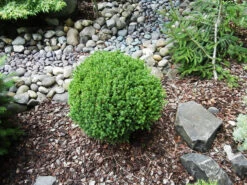

Compressa Dwarf Japanese Cedar
Original price was: $44.50.$31.15Current price is: $31.15.
- Free Shipping over $25
- Fast & reliable delivery options
- Enjoy top quality items for less
- Multiple safe payment methods

To make a garden truly unique, you need to go beyond planting the everyday shrubs and trees. Rarer, special plants make a garden distinctive, turning it from the mundane into the exceptional, and involving you more in it. You will find yourself seeing more and observing your plants and their progress more carefully – overall, your gardening experience will become more worthwhile. These unique plants are often larger specimens, but in smaller spaces there is room for the exceptional too. The world of dwarf evergreens gives us a myriad of distinctive specimens that are smaller, and over the years become more and more beautiful, and larger too. These slow-growing plants become more unique and more valuable the older they are and watching them develop can be a source of deep pleasure. There are other globe-shaped evergreens, but none as beautiful or distinctive as the Compressa Japanese Cedar.
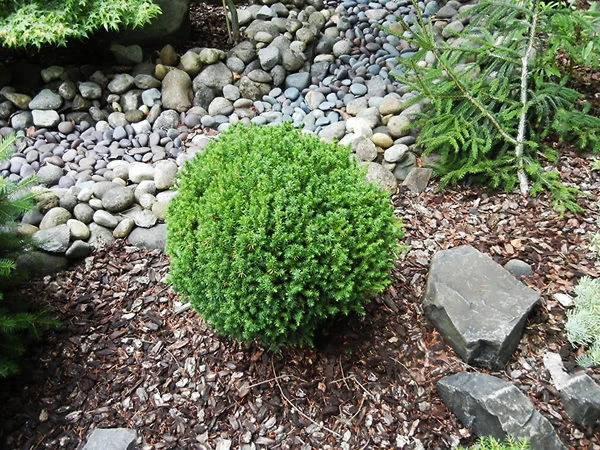
The Compressa Japanese Cedar is a unique plant that grows to become about 15 inches tall and wide in 10 years. It develops a slightly irregular broad egg-shaped to conical form, with stiff, dense, upright branches. This plant grows about 1½ inches a year throughout its life, so in another 10 years it will be approaching 3 feet tall and wide, and it will have become a venerable specimen in your garden. This plant is perfect as a gift to someone (or to yourself) of a plant that adds real value and interest to an existing garden. Grow it in a collection of other dwarf evergreens. Plant it in a rock garden, or beside a paved terrace. Grow it in a planter on a patio or balcony. Start it in a miniature garden in a box or tray, and then move it into a pot or the garden when it becomes too large. It can also be developed into a unique and interesting bonsai tree, and of course it fits perfectly into any Japanese-themed area.
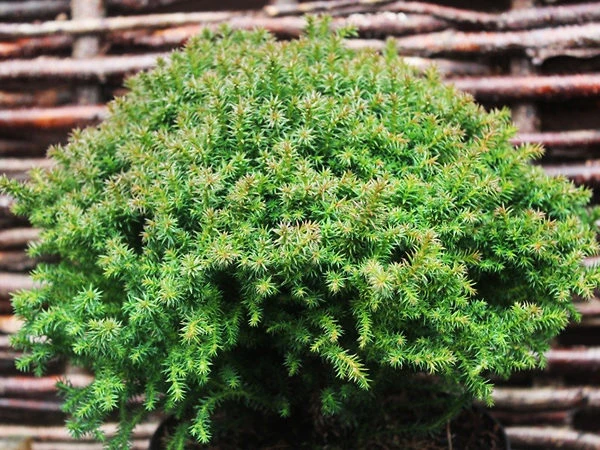
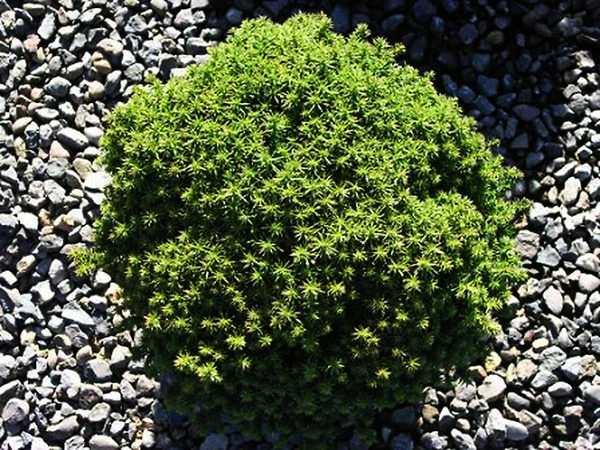
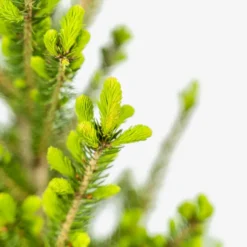
The glossy, flat, dark-green needles of the Compressa Japanese Cedar are about 3/8th of an inch long, and they grow outwards all around the many stems that crowd together to make this plant. Each stem ends in a bushy rosette of needles, creating a fascinating and unique surface texture to the plant. In winter the needles, especially those in the terminal rosettes, turn an attractive and striking red-brown color, or sometimes a purplish-brown, which returns to green when the warm weather arrives. Seed-cones are very unlikely to ever be produced by this plant. No clipping is needed – or desirable – to maintain this plant’s unique form and density, and although it is slow-growing, do allow enough room for its mature size when you are planting in a permanent position.
The Compressa Japanese Cedar should be grown in rich, moist, well-drained soil. It is not very tolerant of dry conditions, especially in hotter zones, and it should be regularly watered as needed. It is hardy in sheltered locations in zone 6, and fully hardy in all warmer zones. Plant it in full sun if the soil is moist, but particularly in warmer zones some afternoon shade is valuable, particularly if the soil tends to be hot and dry. Enrich the soil before you plant with organic material, and mulch placed over the roots – avoid touching the stems or foliage – is valuable to keep the soil cool and to retain moisture. A little evergreen fertilizer is valuable for established plants. For growing in containers used a well-drained potting soil designed for trees and outdoor planters. Water pots regularly and deeply whenever the top inch of potting soil has dried out. Water a little less during cold winter periods but keep this plant outdoors for most of the time. Liquid evergreen fertilizer should be used on potted plants over spring and summer.
The Compressa Japanese Cedar is a unique form of the Japanese cedar, Cryptomeria japonica. Known as sugi in Japan, this is the National Tree, and it grows across the many islands of Japan, in dense forests. It is also found in parts of China. Wild trees reach 100 feet tall, and the aromatic lumber is used for temples and furniture such as storage chests. There are many selected forms of this plant that have been collected and treasured in Japan for many years. We know this plant as ‘Compressa’, and in Japan it is called Borodo-sugi. It was introduced into the Netherlands in 1942, when Japan was an ally of Germany, who occupied the Netherlands in WWII. The nursery of J. Blaauw & Co. in Boskoop, a famous plant growing area in the Netherlands, released the plant into wider circulation after the war ended.
At the Tree Center we love being able to offer these unique and rare specimens, and we know that our clients who love the special will order it very quickly. Add the Compressa Japanese Cedar to your garden collection, but order now, as they will soon all be gone.
Be the first to review “Compressa Dwarf Japanese Cedar”
Related products
Evergreen Trees

Arborvitae Trees
Cypress Trees

Cypress Trees
Evergreen Trees
Cypress Trees
Evergreen Trees

Evergreen Trees
Reviews
There are no reviews yet.