
Golden Bark Japanese Maple
Original price was: $59.50.$41.65Current price is: $41.65.
- Free Shipping over $25
- Fast & reliable delivery options
- Enjoy top quality items for less
- Multiple safe payment methods

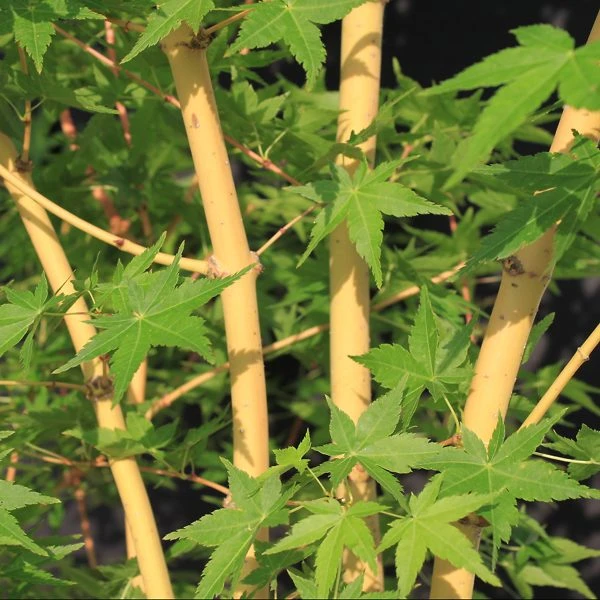
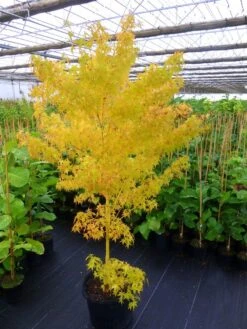
In smaller spaces it is best to have interest in as many seasons as possible. Winter interest is often overlooked, and while Japanese maple tree are wonderful for spring, summer, and fall, most of them are not very exciting in winter, although older trees may have picturesque outlines of branches and twigs. Bark is where trees can have the greatest winter interest, either rough, or peeling textures or multi-toned and bright colors. Although most Japanese maples have brown or green bark, some have much more interesting colors, and the Golden Bark Japanese Maple is among the very best. This beautiful small tree glows gold from head to foot all winter, with wonderful golden-yellow to apricot-colored bark on both the branches and young twigs. Combine that with beautiful fall colors and a modest size suitable for small spaces, and you have a variety that is certainly worth growing in any garden.
Growing Golden Bark Japanese Maple Trees
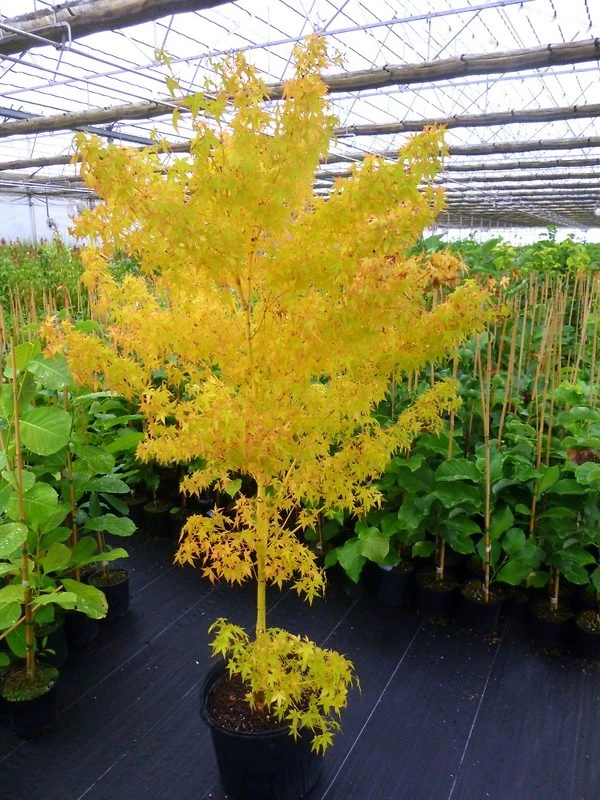
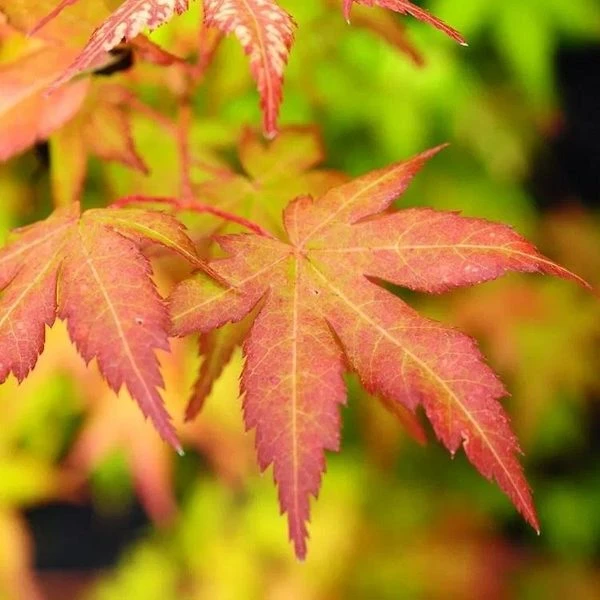
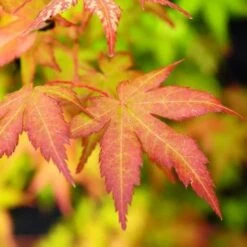
The Golden Bark Japanese Maple is a small, upright tree, reaching just 7 to 10 feet tall, and only 3 to 6 feet wide. It has an upright form, often with several main trunks growing upwards, so it fits perfectly into a narrow space between other plants, in a small bed, or in a planter or pot. Young and medium-aged stems and twigs are colored a rich golden apricot tone, quite different from the normal greens or browns seen on these trees. Older stems at the base will eventually develop a rougher, darker-brown bark. The leaves are divided into 5 broad lobes with toothed edges, cut over half-way into the leaf, making an attractive star-shaped pattern. Because the lobes are relatively broad, this is a variety that will tolerate drier and sunnier conditions than those with very thin lobes. Beautiful as those varieties are, they often shrivel and burn in summer, unless carefully watered and shaded. The leaves are light green in spring and summer, and then in fall they develop beautiful gold, yellow and orange tones, before falling and revealing that gorgeous bark.
Grow the Golden Bark Japanese Maple as a specimen on a small lawn, or in a garden bed. A cluster of 3 or 5 would create a gorgeous miniature woodland on a slope, or as the focus at the end of a garden. Plant it on the margins of a wooded area, and of course this tree is perfect for any Asian-style garden. It makes an especially interesting bonsai tree because of its winter beauty. There is also plenty of scope for using a tree like this in an American garden. It would be beautiful among the evergreens around your home, or in a bed of mixed shrubs. Plant it beside a stream or pond, or on a slope among boulders and rocks. When the winter sun makes the golden bark glow with color, you are going to simply love this tree.
Full sun in zones 5 and 6 is fine for the Golden Bark Japanese Maple, but in warmer zones or poorer soils, partial shade is best. A combination of afternoon shade and morning sun is ideal, or the broken shade beneath deciduous trees. In small urban gardens, some shade is normal, so this tree is an ideal choice, and despite their delicate look, Japanese maples do well in city gardens. The ideal soil is moist, rich in organic material, and well-drained. No matter what your existing soil is like, adding plenty or rich compost, rotted manure, or rotted leaves before planting will give your tree a great start to its life in your garden. Regular watering is necessary when the tree is young, and once established this tree will take some dryness in summer, but not a great deal. Mulch applied in fall or spring will conserve moisture and keep the roots cool, which is particularly beneficial when growing your tree in full sun. Pests and diseases are not usually a problem, and this tree is vigorous and relatively easy to grow in most gardens. If planting in containers, make sure there are drainage holes, and add coarse sand or fine gravel to the potting soil, to give good drainage. This tree has a small root system, so it grows well in containers and pots for many years. Some trimming in late winter will encourage longer young shoots, which have the strongest bark color.
History and Origins of Golden Bark Japanese Maple Trees
The Golden Bark Japanese Maple was introduced in Japan – probably from a unique seedling tree – in 1993, and it was brought to America shortly after that. Its name, ‘Bihou’ means ‘Beautiful Mountain Range’ in Japanese. Like all the wonderful Japanese maples we have, it is a special form of Acer palmatum, a small tree that grows wild in Japan, Korea and China. Wild trees can be anything between 25 and even 40 feet tall. Gardens are usually very small in Japan, so trees that are naturally much smaller are sought after and prized. There are many different Japanese maple trees, but for its combination of attractive leaves, great fall color, and colored bark in winter, this one is very special. We always offer a top-quality range of unique forms, and the Golden Bark Japanese Maple is certainly unique and special. Many of our clients come to us particularly for our range of these gorgeous trees, so our stock of this one will not last long. Order right away, because we have no idea when we might have it available again.
Be the first to review “Golden Bark Japanese Maple”
Related products
Ginkgo Trees
Elm Trees
Maple Trees

Japanese Maple Trees
Ginkgo Trees
Japanese Maple Trees
Shade Trees

Shade Trees
Reviews
There are no reviews yet.