


Graham Blandy Boxwood
Original price was: $44.50.$31.15Current price is: $31.15.
- Free Shipping over $25
- Fast & reliable delivery options
- Enjoy top quality items for less
- Multiple safe payment methods

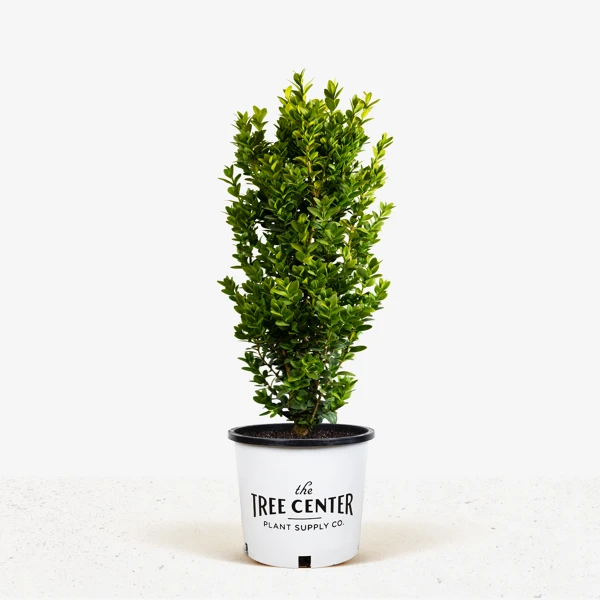
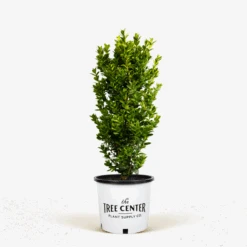
There are just a few plants that will make a very tall vertical accent and remain permanently thin. The Sky Pencil Holly is one, but for a leafy evergreen, rather than a conifer, there is nothing that beats the amazing Graham Blandy Boxwood. A narrow column of small green leaves, every branch grows straight up, creating a spectacular narrow plant that never deviates or grows wider with age. These narrow vertical accents are perfect for framing an entrance, or for creating a focal point in a long part of the garden. Grouped at the corners of beds they bring a powerful formal look more easily than anything else can, especially in smaller gardens – and they don’t need tedious trimming to stay that way. You can also make a remarkable narrow hedge, by planting a row at 12-inch intervals. With a little trimming they will grow together into the thinnest tall hedge you have ever seen.
Growing Graham Blandy Boxwood Shrubs
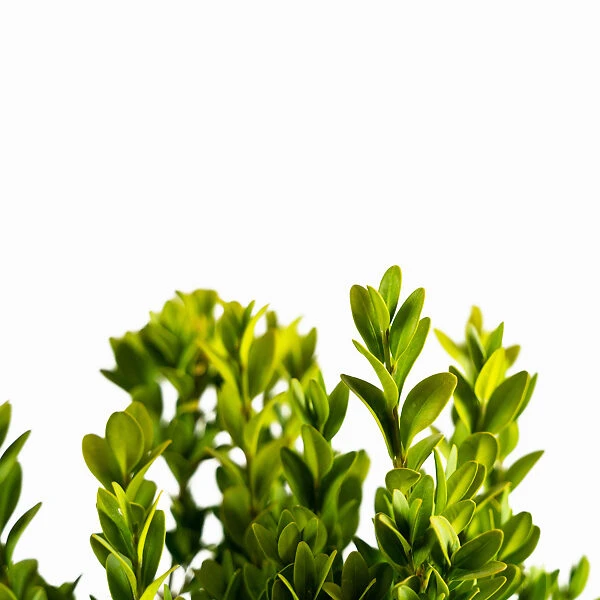
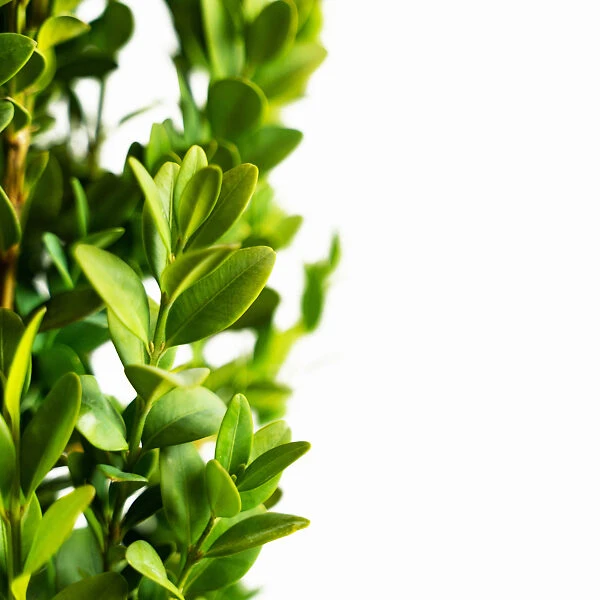
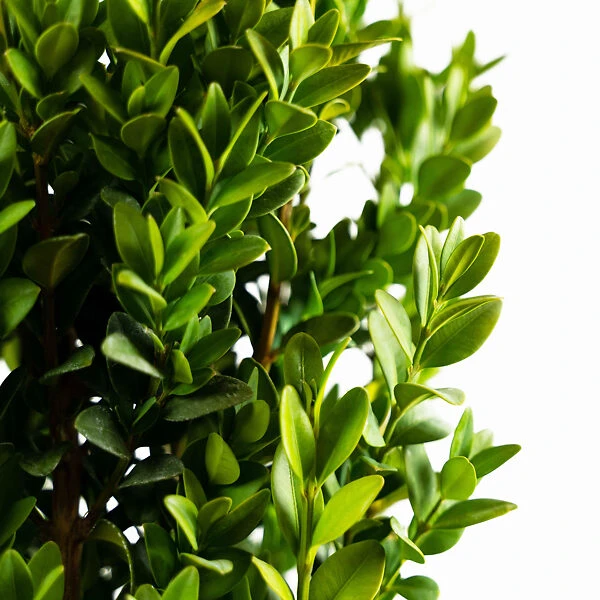
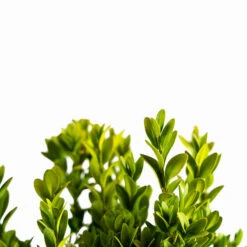
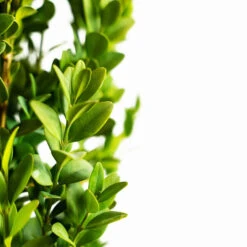
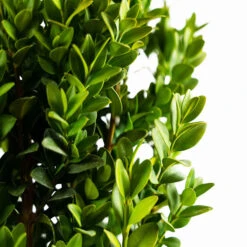
The Graham Blandy Boxwood is a unique variety of the American boxwood. We usually associate that plant with neat, clipped hedges, usually small, but sometimes up to 6 feet tall. So seeing the narrow pencil of the Graham Blandy Boxwood is a fascinating surprise. It has tiny glossy leaves, and every stem grows tightly upright, never branching sideways. The result is a narrow evergreen shrub that will soon be 6 feet tall and just 1 foot wide, and can be developed to at least 15 feet tall, while remaining no more than 2 feet across at the base. Older plants may produce a display of tiny, creamy-green flowers in spring, especially if you don’t trim – and you really don’t need to trim this plant to retain that narrow look.
Planting Location
Plant the Graham Blandy Boxwood in full sun or partial shade, in any ordinary garden soil. Like all boxwood plants it likes good drainage, and soil that is not constantly dry, but once established it has good drought tolerance. Both deer and rabbits generally avoid boxwood, and it has few serious pests or diseases. Although it looks dramatic, this plant is very easy to grow, and because of its natural upright form, you don’t need to trim it, although you can give it a small trim to keep it super-neat if you wish to.
Care and Maintenance
The Graham Blandy Boxwood will grow from zone 5 to zone 9, thriving in ordinary garden conditions. In areas with a lot of winter snow it may need a little help to achieve its maximum height. In fall, to protect the slender branches from breaking, attach a piece of twine to the trunk at ground level, and spiral it up the plant, tying it at the top when you are done. It only takes a few moments, it is almost invisible, but it protects your bush from snow damage.
Reaching 6 feet is easy, but your bush needs some encouragement to reach its possible height of 10 to 15 feet, and even more, without the risk of breakage in storms. Drive a sturdy metal stake into the ground behind your plant, and then attach it to the stake as it grows. You can replace or extend the stake to get more height. Again, this only takes a little time, but the result is worth it. By supporting the plant, you will encourage it to put it energy into growing taller, and then the sky is the limit.
History and Origins of the Graham Blandy Boxwood
Although called ‘American’ boxwood (Buxus sempervirens) grows naturally in Europe, North Africa, the Middle East and probably the British Isles. In Europe and Britain it has been cultivated for centuries, but the first boxwoods that arrived in the colonies were from Amsterdam, in the Netherlands. Those very first plants, brought over in 1653, were planted at Sylvester Manor on Shelter Island, which is part of Long Island, N.Y. This larger plant became known as the American boxwood. The small hedges seen so often are usually called English boxwood, and they are a much smaller variety (‘Suffruticosa’) suitable only for small hedges. This difference is why the Graham Blandy Boxwood can grow so tall.
The exact origin of the ‘Graham Blandy’ variety is not known, but the National Arboretum first grew it in 1971, while European sources suggest 1985 as the first year, so it is almost certainly an American variety. Our trees are grown from stem pieces taken from correctly identified plants of this unique variety. This plant is always viewed with amazement, and it is always in high demand. We have a limited stock, so order now while we can still satisfy your needs.
Be the first to review “Graham Blandy Boxwood”
Related products
Knock Out® Roses
Hydrangeas
Other Shrubs & Hedges
Hydrangeas
Butterfly Bush
Hibiscus
Butterfly Bush
Shrubs and Hedges
Reviews
There are no reviews yet.