

Willow Leaf Bay Laurel
Original price was: $99.50.$69.65Current price is: $69.65.
- Free Shipping over $25
- Fast & reliable delivery options
- Enjoy top quality items for less
- Multiple safe payment methods

If you cook, especially French or European dishes, then you are no stranger to the bay leaf. These fragrant leaves give a special touch to sauces and many dishes, and they are the same plant as was used in the laurel wreaths of ancient Greece and Rome, giving us the word ‘baccalaureate’ for graduating from something difficult.
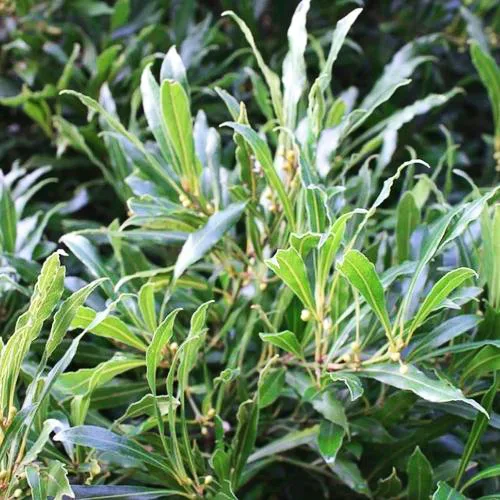
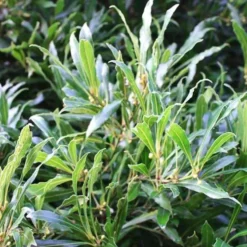
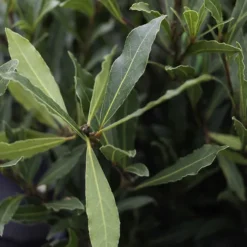
What is less widely-known is that the bay laurel tree is a handsome garden evergreen, that doesn’t have to be trimmed into something formal, and is perfectly happy growing naturally, as a large shrub or small tree. If you look at a lot of wild trees, one thing you will quickly notice is how the width of the leaves varies. Some trees have very thin leaves, less than 1 inch wide – and sometimes less than ½ inch wide. These trees have a unique character, and while the leaves can still be used in the kitchen, their graceful form makes the plant especially handsome in the garden as well. Say hello to the Willow-leaf Bay Laurel, a unique and rare garden evergreen that will be a wonderful addition to your garden, and still give you fragrant bay leaves for the kitchen.
The name ‘laurel’ has been given to an awful lot of plants that have tough evergreen leaves. There is, though, only one Bay Laurel, a noble shrub or small tree, appropriately called by botanist Laurus nobilis. Don’t confuse it with the more common Cherry Laurel. That tree has much larger, glossy leaves, and looks very different from the Bay Laurel, which is easily distinguished by the hard, dry leaves of a much darker green that are not especially glossy and have a delicious fragrance.
Growing the Willow-leaf Bay Laurel
Size and Appearance
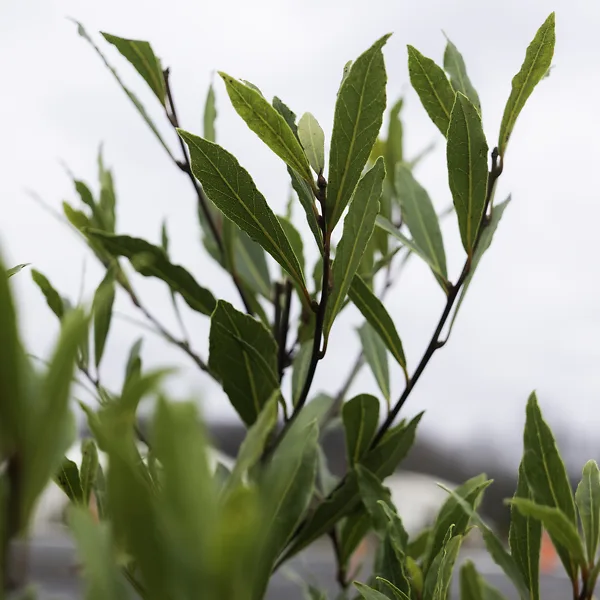
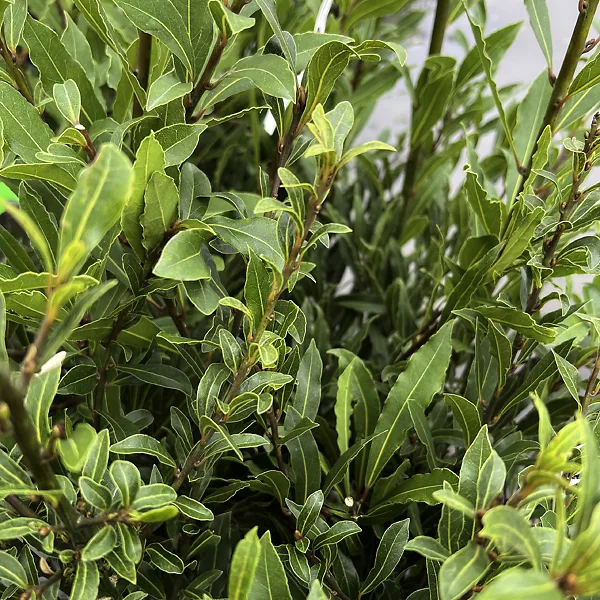
The Willow-leaf Bay Laurel is a unique and beautiful evergreen shrub that grows slowly into a large shrub or small tree. Typically much smaller than other forms of bay laurel, you might expect it to be 12 feet tall in a couple of decades, so a growth rate of about 6 inches a year. Evergreen, it provides color – green – throughout the year. The growth is open and gentle, with a tendency for many of the branches to be horizontal or gently falling, creating a lovely light and airy look.
This description assumes you will not be trimming this tree, which we do not recommend. Let it grow naturally and it will develop a lovely, unique and individual form. If you are looking for a bay tree to trim into cones, pyramids, poodles and other formal shapes, you need to be looking at the Crestwood Bay Laurel, a form with broad, almost circular leaves and dense, heavy growth ideal for trimming as often as you want to do it.
Although it may look very different, the Willow-leaf Bay Laurel is still a bay tree, and the leaves have exactly the same fragrance and ability to flavor food as more ‘normal’ looking forms. So harvest the leaves fresh and use them – note that older leaves have more fragrance and better flavor. They can be used fresh, or dried by several simple methods to give dry leaves that will last a year or more in an jar with a tight lid.
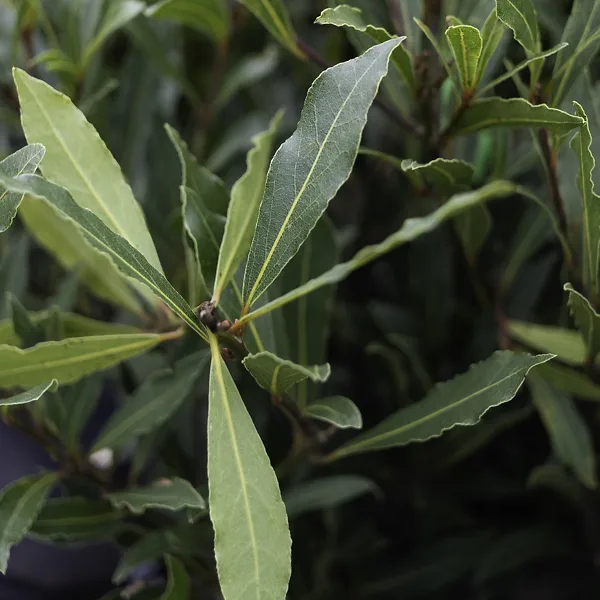
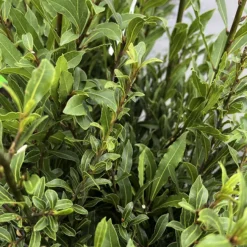
Where the leaves are very different is in their shape. Regular bay leaves are broad ovals, tapering at both ends to a point. In the Willow-leaf Bay Laurel They are 1½ to 3½ inches long but only ¼ to ⅞ of an inch wide, with an average width of about ½ an inch. These slender leaves create a completely different look, of a charming garden shrub with an open, airy look that will have visitors asking, “What is that lovely plant?” Note that the leaves have the same fragrance and flavor, and can be used in the kitchen in exactly the same way – you might need an extra leaf or two to make up for the smaller size of the leaves.
Since you are going to grow this tree unpruned, or at most with just a little shaping in early summer, it is much more likely to flower than trimmed bushes do. Along the stems, in spring, clusters of greenish-yellow fluffer flowers appear. These are fragrant, attract bees and pollinators, and give a charming look to your tree. They may also develop into small greenish to blackish fruits that resemble tiny green olives – even more reasons to treat this tree not as an adjunct to your kitchen, but as a beautiful addition to your collection of garden shrubs and trees. Notice that flowering is most profuse in the warmest zones.
Using the Willow-leaf Bay Laurel in Your Garden
The gentle, slightly open form of the Willow-leaf Bay Laurel makes it perfect for natural areas of your garden, near larger trees or backing beds of mixed shrubs. It could certainly be used as an informal screen, but don’t try to clip it into a formal hedge – it just isn’t going to work out well for you. Treat it as a charming natural evergreen shrub and you will be rewarded with exactly that..
Hardiness
The Willow-leaf Bay Laurel will grow happily in zone 7, although you may see some short-lived winter damage on some of the outermost leaves. In all warmer zones it is completely hardy and tolerates winter well. Should you want to grow it in a pot, only in zone 9 and warmer can the pot be left outdoors all winter – the roots are quite cold sensitive. In late fall simply bury the plant in the garden, with or without the pot, and in spring lift it and repot as needed.
Hardy in zone 7, but may show a little winter scorching on the leaves. In warmer zones it is completely winter-resistant. If you live in a colder zone, grow it in a pot and keep it in a bright but cool place through winter. Notice that in pots trees are only hardy year-round outdoors from zone 9, due to the sensitivity of the roots to cold. In zones 7 and 8, bury the plant, in the pot or slid out of it, in the garden and it will be just fine.
Sun Exposure and Soil Conditions
The Willow-leaf Bay Laurel is very easy to grow. Plant it in full sun, partial sun, or light open shade beneath deciduous trees (not heavy evergreens). Grow it in any well-drained soil., Some compost worked into the ground when planting, and some more as mulch over the root zone will do wonders for its growth, especially during the first 5 to 10 years of its life in your garden.
Maintenance and Pruning
No need to trim, and pruning should at most be a light shortening of branches and some general shaping in late spring – but it really isn’t necessarily.
You may confusingly see references to deer eating ‘laurel’ trees, but those are not bay laurel, but other evergreens. The bay laurel is one tree that truly is deer proof – they just loath the smell and will never eat the leaves. We can almost guarantee that. As for other pests or diseases, forget it, they are not going to happen in any noticeable way.
History and Origin of the Willow-leaf Bay Laurel
The bay laurel or bay tree, Laurus nobilis, grows naturally all around the Mediterranean, and has been used since time immemorial for wreaths to wear in celebration of a victory – military, sporting or academic. Our word ‘baccalaureate’ for graduating comes from it – see ‘laurel’ buried in the middle?
It was cultivated for the kitchen in England as early as the 16th century and probably arrived in North America multiple times with groups of settlers from many parts of Europe.
If you look at a big group of seedling trees of the bay tree, you soon notice differences in the relative width of the leaf to its length. Some trees have very narrow leaves around ½ inch wide, or even less. Botanists recognize this by calling such trees a ‘forma’ – the smallest unit of classification from the natural species. The Willow-leaf Bay Laurel is therefore known to botanists – and to keen gardeners – as Laurus nobilis f. angustifolia, where ‘f.’ is simply the standard abbreviation for ‘forma’.
Buying the Willow-leaf Bay Laurel at the Tree Center
So grow something very different, appealing, eye-catching and unique in your garden, the Willow-leaf Bay Laurel. This tree is only very rarely grown by nurseries, and we were lucky to stumble across these trees at the nursery of one of our top suppliers. Don’t miss out, we may never see them again, and we were only able to acquire a small number of them.
Be the first to review “Willow Leaf Bay Laurel”
Related products
Butterfly Bush

Boxwood Shrubs
Hydrangeas
Rhododendron

Boxwood Shrubs
Butterfly Bush
Hibiscus
Knock Out® Roses
Reviews
There are no reviews yet.